Demystifying Fish Finders: A Beginner’s Guide to Understanding Fish Finders
In the world of angling, the advancements in technology have revolutionized the way fishermen locate and catch fish. One such innovation that has become indispensable for both novice and seasoned anglers is the fish finder. Fish finders are sophisticated devices designed to detect fish underwater, helping anglers pinpoint their location with precision. In this comprehensive guide, we’ll delve into the basic features of fish finders, how they work, and how to set them up on your boat.
Understanding Fish Finders: The Essentials
1. Transducer: The transducer serves as the cornerstone of any fish finder. It emits sonar waves into the water, which bounce off objects, fish, and structures beneath the surface. These echoes are then captured and interpreted, providing valuable insights to the angler. This empowers you to make informed decisions about where to cast, what lures or bait to use, and how to adjust your presentation. The transducer helps you read the underwater world, giving you a strategic advantage in pinpointing the location of your target fish and increasing your chances of a successful catch.
Popular Transducer Types
In-Hull Transducer
- Protected Design: Ensures superior protection against impacts and underwater hazards compared to externally mounted options.
- Clean Aesthetics: Offers a streamlined appearance, integrating seamlessly into the hull for a refined look.
- Balanced Performance: Delivers good sonar performance across a range of depths and boat speeds.


Transom Mount Transducer
- Simplified Installation: Enables straightforward DIY installation and removal, ideal for anglers who prefer a more hands-on approach.
- Versatile Application: Well-suited for a variety of fishing scenarios, particularly in shallower and medium depths.
- Cost-Effective Choice: Generally represents the most budget-friendly option among transducer types.
Thru-Hull Transducer
- Unparalleled Performance: Provides exceptional signal clarity and performance regardless of boat speed, ensuring the most accurate readings.
- Deep-Water Expertise: Ideally suited for deep-water fishing applications due to its direct contact with the water column.
- Minimal Interference: Offers the cleanest possible sonar signal for the most precise fish and structure detection.
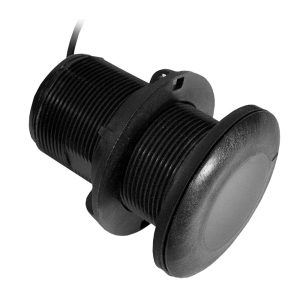

Trolling Motor Transducer
- Shallow Water Advantage: Provides a clear, forward-facing view, making it ideal for navigating shallow water areas and precisely targeting specific structures.
- Confined Maneuvering: Enables effective navigation in tight spaces and around obstacles for optimal positioning.
- Real-Time Updates: Offers a constantly updated view directly in front of your boat, allowing for immediate adjustments based on underwater conditions.

Ice-Fishing Transducer
Winter Warrior: Specially designed to function through the ice, allowing anglers to locate fish and bottom features in frozen lakes.
Portable & Compact: Built for portability and easy setup on an ice fishing shelter.
Clear Ice Readings: Provides clear readings of water depth, fish location, and bottom composition for successful winter fishing.
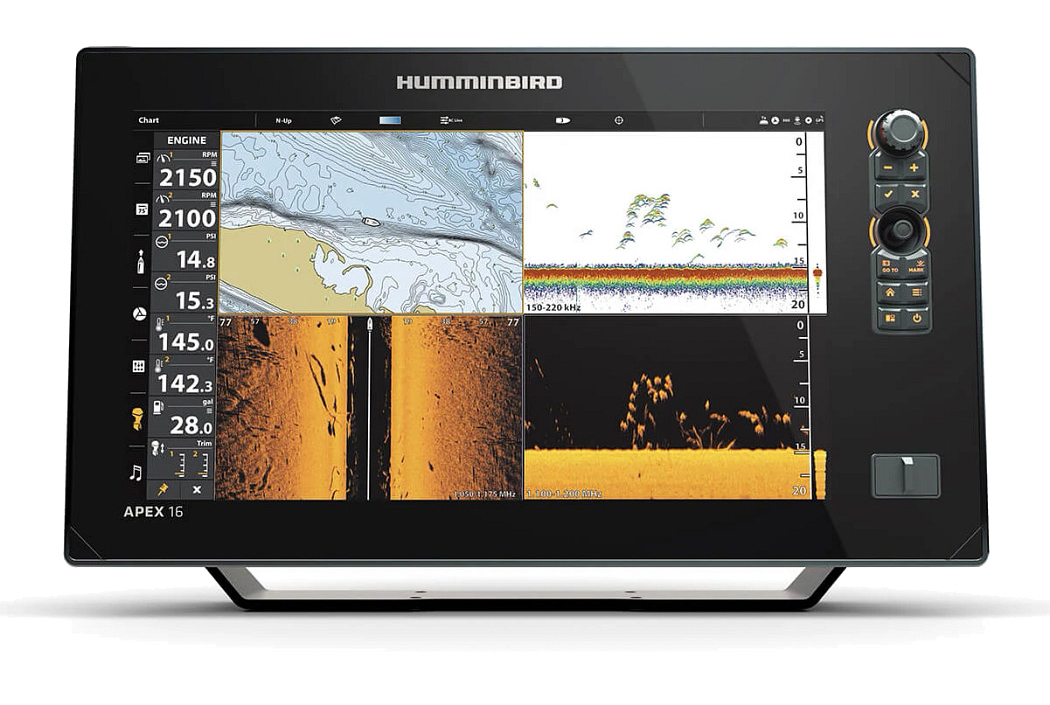
2. Display Unit: The display unit acts as the command center, presenting the information gathered by the transducer in a user-friendly format. It typically showcases data such as water depth, fish location, underwater terrain, and temperature.
3. Sonar Technology: Fish finders utilize various sonar technologies, including traditional sonar, down imaging, and side imaging. Traditional sonar provides a vertical view directly beneath the boat, while down imaging offers a more detailed perspective of the bottom structure. Side imaging, on the other hand, expands the field of view to the sides of the boat, allowing for comprehensive coverage.
4. Frequency Range: Fish finders operate across a spectrum of frequencies, each catering to specific fishing conditions. Lower frequencies penetrate deeper waters but sacrifice detail, whereas higher frequencies offer enhanced resolution but are limited to shallower depths. Dual-frequency and multiple-frequency models provide versatility for diverse fishing environments.
5. GPS Integration: Many modern fish finders come equipped with GPS functionality, enabling anglers to mark waypoints, navigate with precision, and create custom maps of their favorite fishing spots. GPS integration enhances overall situational awareness and ensures seamless navigation on the water.

Setting Up Your Fish Finder
Now that you grasp the fundamental components of a fish finder, let’s delve into the setup process:
1. Transducer Installation: Select an appropriate location on your boat’s transom or hull to mount the transducer. Ensure it is securely positioned and aligned to minimize interference and maximize performance. Follow the manufacturer’s instructions meticulously to achieve optimal results.
2. Power Connection: Connect the power cable of your fish finder to your boat’s electrical system. Double-check the connections to avoid any electrical issues or malfunctions. It’s crucial to adhere to safety protocols and consult professional assistance if necessary.
3. Display Unit Placement: Choose a strategic location on your boat to mount the display unit, ensuring it is easily accessible and visible from your fishing position. Consider factors such as glare, accessibility, and protection from the elements when determining the optimal placement.
4. Configuration and Calibration: Familiarize yourself with the settings and features of your fish finder, adjusting parameters such as sensitivity, depth range, and display preferences to suit your fishing style and environment. Calibrate the transducer and conduct thorough testing to verify functionality before hitting the water.
5. On-Water Testing: Once your fish finder is set up and calibrated, embark on a test run to evaluate its performance in real-world conditions. Take note of any anomalies or discrepancies and make necessary adjustments to fine-tune its operation.
Top Fish Finder Brands and Models
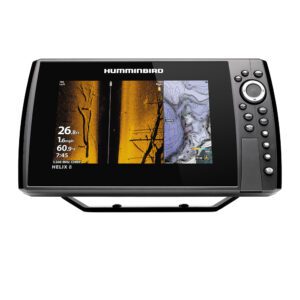
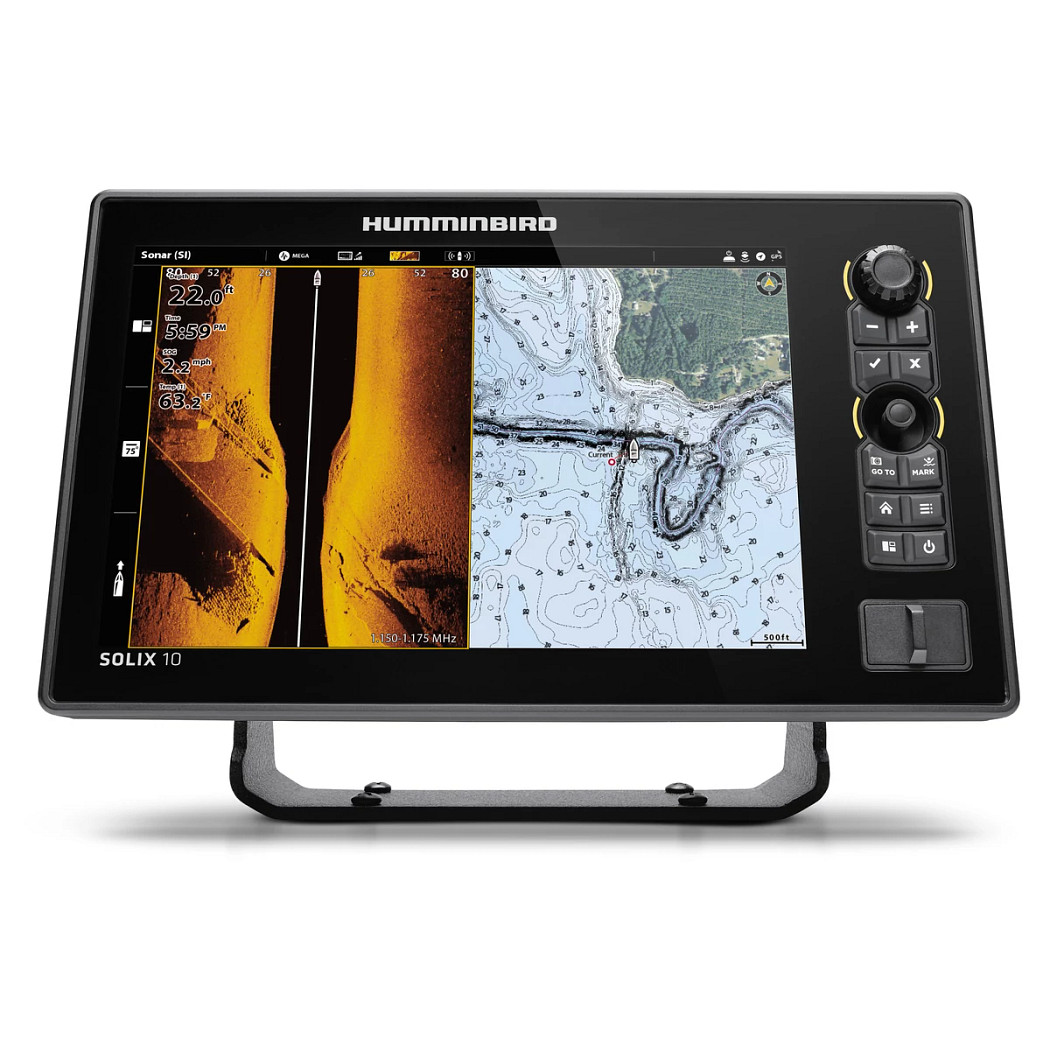
When it comes to fish finders, two brands reign supreme in the market: Humminbird and Lowrance. Let’s explore some of their most popular models:
Humminbird:
- Humminbird HELIX 7 CHIRP GPS G3
- Humminbird HELIX 5 Sonar G2
- Humminbird SOLIX 15 CHIRP MEGA SI+ G3
Lowrance:
- Lowrance HOOK Reveal 7 SplitShot
- Lowrance Elite-7 Ti2 Fishfinder/Chartplotter Combo
- Lowrance HDS-12 Live Fishfinder/Chartplotter with Active Imaging 3-in-1
Where Innovation Meets Technology
Fish finders have undeniably revolutionized the angling industry, offering fishermen an unparalleled advantage in locating and catching fish. From novice anglers to seasoned professionals, these devices have become indispensable tools for understanding underwater terrain and fish behavior. By demystifying the technology behind fish finders, we’ve explored their core components, including transducers, displays, sonar technologies, frequencies, and GPS integration. This comprehensive understanding empowers anglers to harness the full potential of their devices and make informed decisions on the water.
Moreover, a well-informed angler is better equipped to choose the right fish finder for their specific needs. Leading brands like Humminbird and Lowrance consistently push the boundaries of innovation, offering a wide range of models with varying features and price points. Thorough research and consideration of individual fishing styles and budgets are essential when selecting a fish finder. With the right device and a commitment to practice and experimentation, anglers can unlock the full potential of fish finder technology, leading to more successful and enjoyable fishing experiences.
So, gear up, set sail, and let your fish finder guide you to your next trophy catch!